

Become a Distributor
Aeration and Mastering Whipped Cream Canister Recipes with Professional N2O
The Best Whipped Ice Cream with Galaxy Gas Flavors
Whipped ice cream—often referred to as “no-churn” ice cream—is a culinary miracle of chemistry. By leveraging the physical properties of heavy cream and sweetened condensed milk, chefs can create a velvety, scoopable dessert without the need for expensive, bulky ice cream churners.
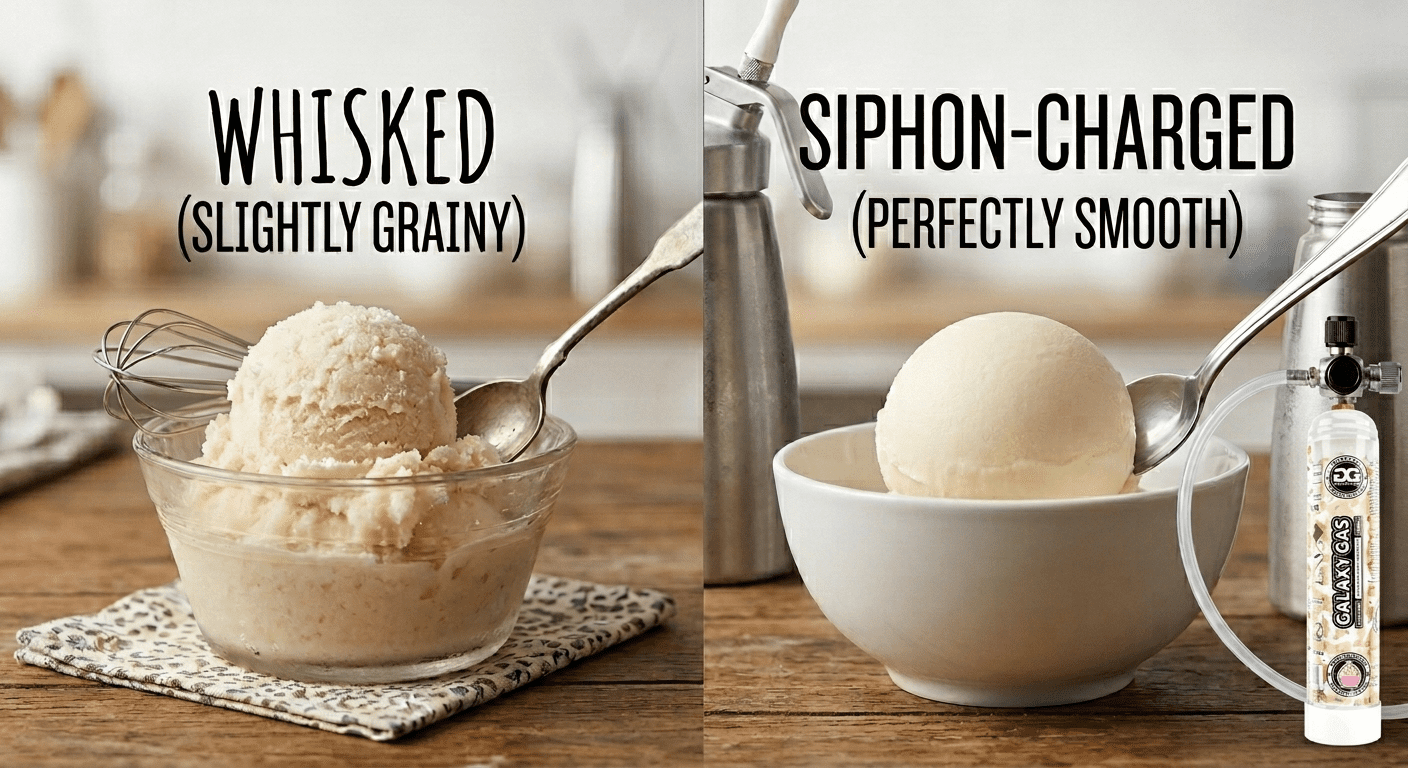
However, there is a significant difference between a standard “home-made” whipped dessert and a professional-grade frozen mousse. The secret to that elite, “galaxy-soft” texture lies in the method of aeration. Whether you are a home enthusiast or a commercial kitchen manager, upgrading from a hand whisk to a nitrous oxide tank system changes the molecular structure of your dessert.
Why Whipped Ice Cream works
To understand why a nitrous oxide tanks, like these at Galaxy Gas are the ultimate tool for this recipe, we must look at the two-ingredient foundation.
1. The Heavy Cream (The Structure)
Heavy cream is an emulsion of water and fat globules. When you whip it, you are forcing air into the liquid, which is then trapped by a network of fat molecules. In a professional setting, using a nos tank allows you to introduce N2O at a specific PSI (Pounds per Square Inch). This results in smaller, more uniform bubbles than a mechanical whisk, leading to a denser, creamier mouthfeel that doesn’t “collapse“ as easily in the freezer.
2. Sweetened Condensed Milk (The Stabilizer)
Sweetened condensed milk is one that has had most of its water removed. It serves two purposes:
Antifreeze: The high sugar content lowers the freezing point of the cream, ensuring the ice cream remains “scoopable” even at 0°F
Texture: It provides the silky “body” that mimics the custard base of traditional French-style ice cream.
How To Make Whipped Cream via the Professional Whipped Cream Canister Recipe
While “folding” cream with a spatula works, you could use a pressure-charged siphon for instant results. This is the gold standard for boutiques and high-volume cafes.
The “Nitro-Freeze” Recipe
500ml Heavy Cream (36%+ fat)
250ml Sweetened Condensed Milk
1 tsp Vanilla Bean Paste (or a custom infusion)


The Professional Method:
Whisk your condensed milk and flavorings until smooth.
Incorporate the liquid heavy cream.
Pour the mixture into a professional cream siphon.
Connect your nitrous oxide tank via a regulator.
Charge the siphon to 8-10 bar.
Dispense the “instant foam” directly into a chilled loaf pan.
The Result: Because the N20 from your nitrous tank has already emulsified the fats, the freezing time is reduced, and the texture is significantly more refined
Why Use a Nitrous Oxide Tank Over Individual Canisters For Whipped Cream Recipes?
If you are running a business or a high-volume dessert station, the limitations of 8g nitrous oxide canisters become apparent quickly.
Waste Reduction: One 640g or 2000g nos tank replaces dozens of small canisters, reducing your carbon footprint and kitchen clutter.
Pressure Control: Using a regulator with your nitrous tank allows you to dial in the exact “overrun” (the amount of air in the cream). For a dense gelato feel, use lower pressure; for a light, soft-serve feel, increase the PSI.
Double up the speed at which you can prep 10+ liters of ice cream base using a tank system
Become a Distributor
Homemade Whipped Cream: Crafting Signature Flavors
One of the biggest advantages of using nitrous oxide canisters or tanks is Rapid Infusion. Instead of just stirring in chocolate syrup, you can create “Top-Shelf” flavors by infusing the cream itself.
The 2-Minute Botanical Infusion
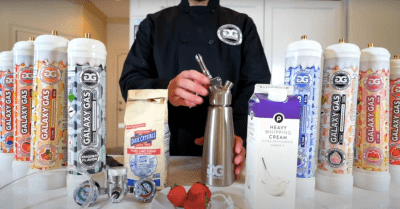
Before mixing with the condensed milk, place your heavy cream into a siphon with:
Option A: Fresh basil and cracked black pepper (for a savory strawberry pairing).
Option B: Toasted espresso beans and a cinnamon stick.
Option C: Dried lavender and lemon zest.
Charge the siphon with your nitrous oxide tank, let it sit for two minutes, and then vent. The pressure forces the aromatic oils into the cream instantly. Strain the cream and proceed with your whipped ice cream recipe. This creates a flavor depth that “basic” recipes simply cannot touch.
Troubleshooting and Pro-Tips
Avoiding the “Icy” Texture
The most common complaint with whipped ice cream is that it can become “icy” after 48 hours.
The Fix: Increase the fat content. Ensure you are using “Heavy Manufacturing Cream” if available. The more fat, the fewer ice crystals.
The Pro-Tip: Add one tablespoon of vodka or bourbon to the mix. Alcohol doesn’t freeze, which keeps the ice cream even softer.
Managing “Over-Whipping”
If you whip your cream too long, it turns to butter. Using a nos tank system mitigates this risk. Because the aeration happens inside the pressurized siphon, you cannot “over-whip” it manually. The gas does the work for you.
Conclusion: The Future of Frozen Desserts
Whipped ice cream is more than a “two-ingredient hack”—it is an entry point into the world of molecular gastronomy. By moving away from manual whisking and embracing the precision of a nitrous oxide tank, you unlock textures and flavors that were previously reserved for Michelin-star kitchens.
Whether you are looking to become a Distributor and provide these high-capacity solutions to your local culinary scene, or you are simply a creator looking for the best whipped cream canister recipe, the key is purity and pressure.

Become a Distributor
FAQ
Q: Can I use these tanks for high-volume soft serve?
A: Yes. Many Galaxy Gas style setups are used to create instant-serve mousses that are frozen to a soft-serve consistency. It is the most cost-effective way to add a “Specialty Dessert” to your menu without a $5,000 Taylor machine.
Q: How many batches can I get from a 640g tank?
A: A 640g nitrous oxide tank can typically charge approximately 60-80 siphons (500ml each). This allows for massive dessert production with a single supply. Good for homemade whipped cream experience
Q: Is it safe to store the tanks in a kitchen?
A: Yes, provided they are kept away from direct heat (stoves/ovens). Food-grade N2O is non-flammable, though the tanks are pressurized and should be handled with standard safety protocols.
| Explore our range of Nitrous Oxide Tanks and Regulator
→ Article I | Food-Grade Nitrous Oxide Tank
→ Article II | Galaxy Gas Compatability
→ Article III | N2O vs CO2 Chargers